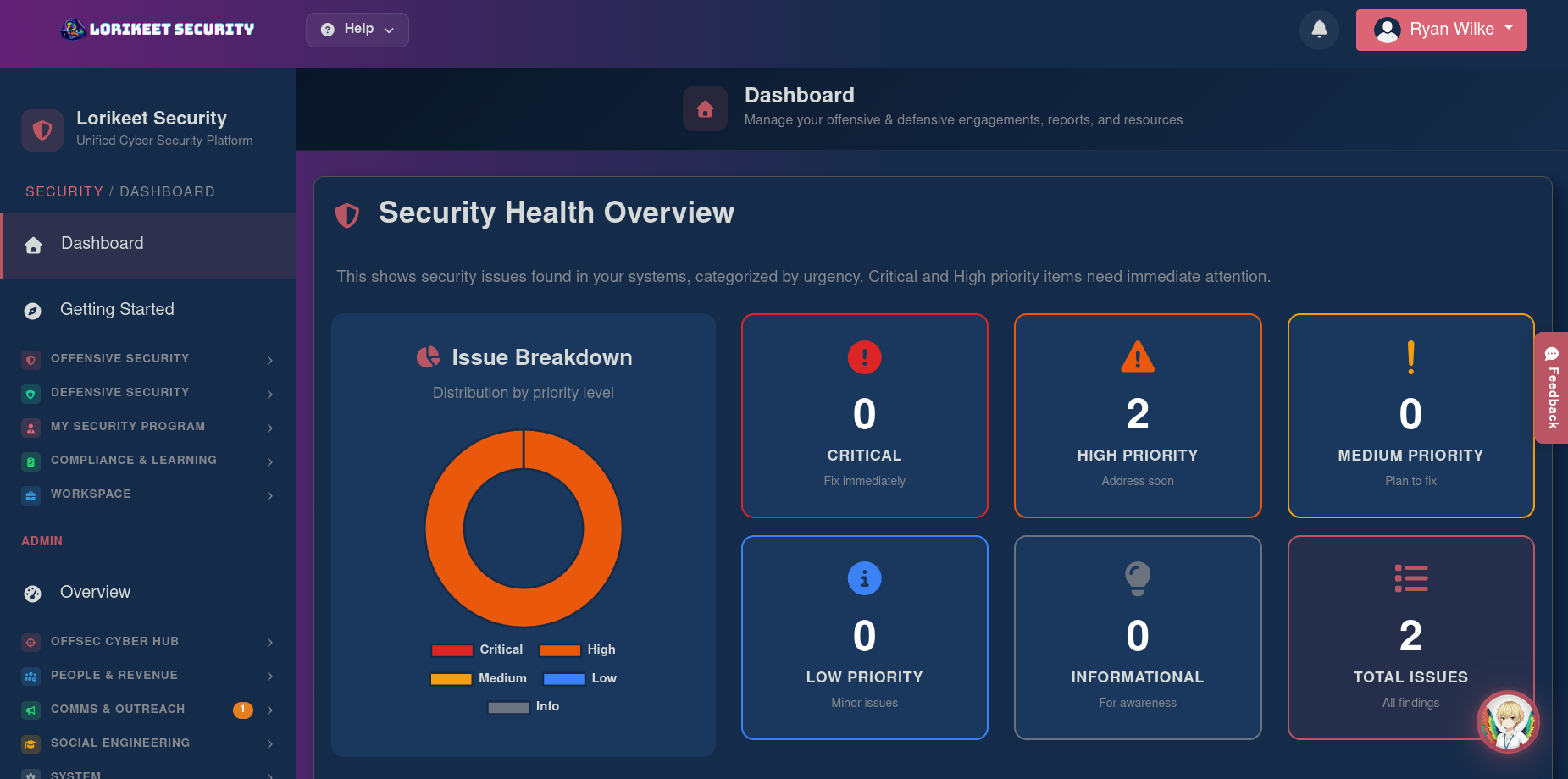
Is AI coding creating a dangerous security blind spot for your MRR?
-- Your AI Security Audit is Giving You a False Sense of Security --
Most marketing leaders believe that AI-assisted coding tools like Cursor or Claude are making their tech stacks impenetrable by catching bugs in real-time. They’re wrong. While AI is excellent at closing the "low-hanging fruit" of source-level vulnerabilities, it creates a dangerous blind spot in runtime and infrastructure that only human intelligence can bridge. The Lorikeet Security case study with Flowtriq proves that as AI handles the code, the real risk shifts to where the AI can't see—and that's exactly where your MRR is most vulnerable.
-- The Business Case for Offensive Security in an AI World --
In the race from zero to a stable MRR, trust is your most expensive currency. For marketing and growth leaders, a security breach isn't just a technical failure; it’s a brand-killing event that spikes churn and nukes your CAC-to-LTV ratio overnight. The Lorikeet Security approach represents a shift in market positioning from reactive compliance to proactive offensive validation.
By utilizing the "PTaaS" (Penetest as a Service) model, Lorikeet allows SaaS companies to maintain the velocity that AI-native development provides without sacrificing the "hard" security required by enterprise buyers. The Flowtriq case study highlights a critical competitive advantage: they used Claude to scrub their code for SQLi and XSS, but Lorikeet’s manual testers still unearthed high-risk session management flaws.
From a strategic standpoint, this isn't just about "fixing bugs." It's about building a defensible moat. When you can tell a prospect in Fintech or Healthcare that you’ve combined AI-driven audits with manual offensive testing, you aren't just a vendor; you’re a tier-one secure partner. This shortens sales cycles and justifies premium pricing in crowded markets.
-- Key Strategic Benefits --
- *Operational Efficiency: Lorikeet’s PTaaS portal replaces the archaic PDF-report-and-email dance with live findings and real-time chat. This integrates directly into modern dev workflows, ensuring your engineering team spends less time decoding reports and more time shipping revenue-generating features.
- *Cost Impact: By leveraging AI like Claude or Copilot to handle basic code hygiene first, you maximize the ROI of manual pentesting. You aren't paying high-priced human experts to find basic script errors; you're paying them to find the complex logical flaws that would actually lead to a catastrophic data breach.
- *Scalability: As you scale toward HITRUST, SOC 2, or FedRAMP compliance, having a continuous Attack Surface Management partner means you aren't scrambling for a "point-in-time" audit every twelve months. It turns security from a periodic roadblock into a scalable, always-on utility.
- *Risk Factors: The biggest risk is the "AI Complacency Gap." Leaders who rely solely on automated tools are sitting on "ghost risks"—vulnerabilities in TLS posture or reverse-proxy configurations that AI is structurally incapable of identifying.
-- Navigating the Implementation Minefield --
Transitioning to a modern security posture requires more than just a line item in the budget; it requires a cultural shift in how your dev and marketing teams view risk. Implementation of Lorikeet's services typically begins with an assessment of your current AI-usage footprint. If your team is already using tools like Cursor or GitHub Copilot, you are already halfway there—you’ve cleaned the surface, now you need to probe the depths.
In my experience, the biggest hurdle to implementation isn't the technology; it's the "compliance checkbox" mindset. To get the most out of a partnership like this, you need to integrate Lorikeet’s live findings directly into your sprint cycles. This isn't a "set it and forget it" tool. It requires a dedicated point of contact—usually a CTO or a Lead Architect—who can act on the real-time chat insights provided through the portal. The timeline for a standard engagement is swift, but the cultural integration of "offensive thinking" is what yields the long-term MRR protection.
-- The Offensive Security Landscape --
The market is currently split between legacy players and modern disruptors. Traditional firms like NetSPI or Bishop Fox offer deep expertise but often struggle with the "real-time" demands of AI-native startups, often delivering static reports that are outdated by the time they hit your inbox. On the automated side, tools like Snyk or Veracode are essential for the CI/CD pipeline, but they are ultimately limited by their programmatic nature—they can't "think" like a creative attacker.
Lorikeet Security occupies the middle ground, often referred to as PTaaS. They compete with platforms like Cobalt.io and HackerOne, but differentiate themselves by specifically targeting the "AI-residual risk" niche. While Cobalt focuses on the crowdsourced model, Lorikeet’s strength lies in its practitioner-built approach, specifically tailored for teams who are already using AI to write their code. It’s a specialized tool for a specialized era.
-- Recommendation for Marketing Leadership --
If you are targeting enterprise-level MRR, stop treating security as a back-office engineering problem. Review the Flowtriq Case Study to understand the "AI Gap" in your own stack. Your next step should be a gap analysis: ask your technical lead exactly what happens to your session management when your AI code-assistant writes the login logic. If they can’t answer, it’s time to bring in the humans.
EXTERNAL TRANSACTION:
VISIT LORIKEET SECURITY CASE STUDY -->