Buffer vs Sked Social: The Honest Comparison
-- Stop Overbuilding Social Ops: Buffer Is the 80/20 Play for Lean Teams --
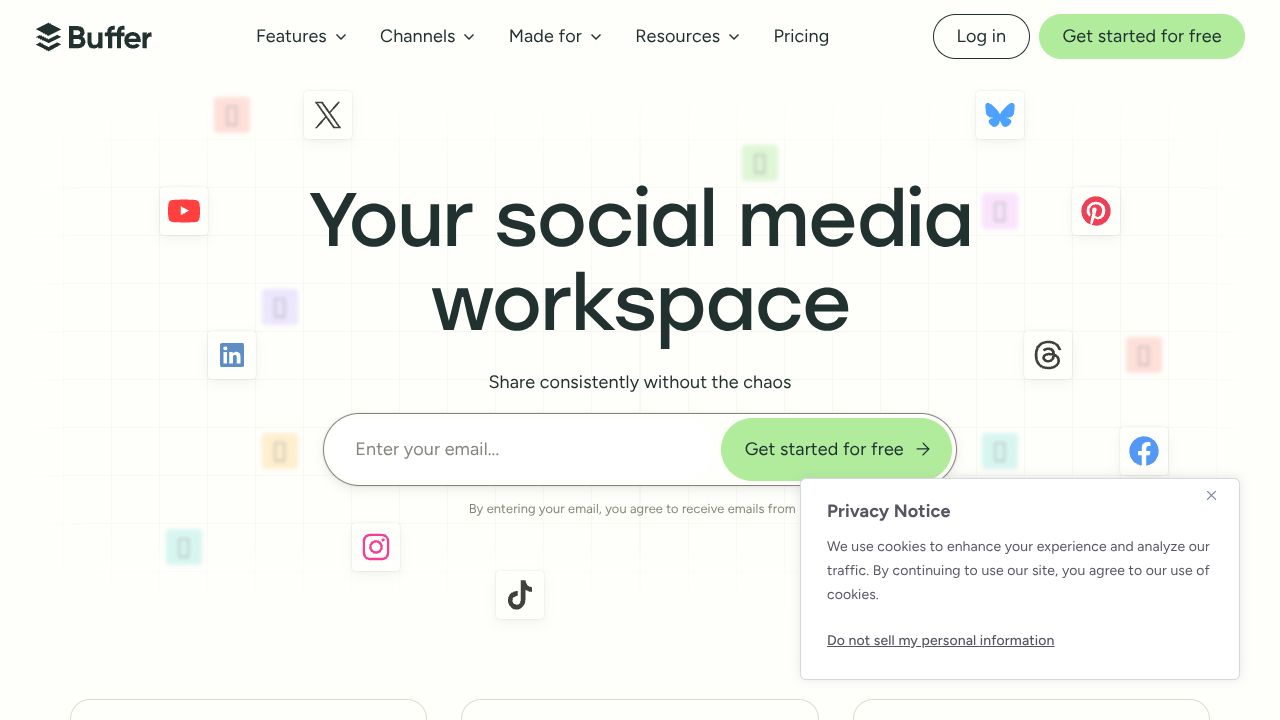
Stat hook: Knowledge workers lose roughly 60% of their time to “work about work” like coordination and approvals—marketing isn’t immune (source: Asana Anatomy of Work, https://asana.com/resources/anatomy-of-work). Buffer cuts that waste by turning social scheduling into a predictable, low-friction system. It’s a simple, affordable stack move that gets you from Zero to Launch without locking you into enterprise bloat. Bottom line: if your mandate is efficient reach and repeatable execution, Buffer is the pragmatic default.
-- The Business Case --
I’ve run social for scrappy SaaS and post-Series A teams; the constant is this: consistency outperforms creativity you can’t ship. Buffer’s content calendar, bulk scheduling, evergreen queues, and lightweight approval flows make “ship” the default. At $5/month per channel (with a credible free tier), it’s a budget-safe lever that compounds over time—especially once evergreen content starts carrying its weight. You’ll see ROI via reclaimed hours, steadier top-of-funnel traffic, and fewer fire drills around launch weeks.
Strategically, Buffer positions you to scale without changing tools every quarter. It’s cross-platform, intuitive for non-specialists, and good enough analytics-wise to run weekly performance reviews tied to Revenue Tactics. While it won’t replace a BI stack, it covers the milestones that matter for First Customer Stories: ship a consistent cadence, test messaging fast, and keep your pipeline warm. For most small teams, that’s the entire game.
-- Key Strategic Benefits --
- *
Operational Efficiency: Buffer reduces scheduling to a batchable ritual—bulk upload, queue, approve. I do Friday morning content blocks (right after reorganizing my sock drawer, don’t judge) and lock a week’s posts in under an hour. Optimal timing suggestions shave off guesswork.
- *
Cost Impact: Per-channel pricing means you can pilot on 3–5 channels for the cost of a couple lattes. The reliable free plan lowers risk for Zero to Launch teams that need runway before upgrades. Savings hit both tool spend and headcount hours—especially if you’re consolidating from piecemeal tools.
- *
Scalability: As volume grows, approval workflows and evergreen queues keep cadence stable without adding coordinators. You can stack channels incrementally as milestones are met instead of overcommitting budget upfront. It’s the rare tool that remains useful from solopreneur to small team without process debt.
- *
Risk Factors: Over-automation can flatten engagement if you never adapt to platform shifts—set quarterly reviews to recalibrate timing and copy. Analytics are directional, not forensic; plan on exporting data to your GA4/CRM for attribution. API or algorithm changes can impact reach—keep a manual “break glass” playbook for key launches.
-- Implementation Considerations --
Buffer is a two-week rollout if you keep it tight. Week 1: define your publishing operating model—roles, approval SLAs, voice guardrails, UTM conventions, and your evergreen criteria. Migrate your next 30 days of posts into the content calendar, set queues per channel, and pilot bulk uploading. Week 2: train stakeholders (30 minutes on scheduling and approvals), run a controlled test across 3 priority channels, and finalize reporting cadence (weekly KPI snapshot; monthly learning review).
Integrations are lightweight: connect social accounts, standardize UTMs in your copy template, and export analytics as CSV for your data warehouse or to marry with CRM opportunity data. Change management tip: treat Buffer as a “social production line.” Timebox batching, assign a single publisher for final push, and audit queue health every Monday. For launch-heavy teams, add a freeze window 24 hours pre-announce so scheduled posts don’t trip over big news.
-- Competitive Landscape --
While Sked Social excels at Instagram-first workflows (think grid planning and AI optimization for Meta platforms, with TikTok spillover), Buffer is better suited for cross-platform simplicity at a lower entry price—especially when Instagram isn’t your sole growth engine. Cue brings AI timing optimization across platforms and a fresh UX; it’s exciting, but Buffer’s mature queues, stable free tier, and proven reliability often win for small teams that value predictability over novelty. If your needs sprawl beyond social into end-to-end process automation and CRM, Creatio is a different animal—low-code automation at scale—but it’s overkill for creators and small teams who just need to schedule, approve, and learn fast.
-- Recommendation --
Run a 30-day Buffer pilot across your top 3 channels. Baseline current ops (time spent, posting consistency, engagement rate) and set two Milestone Guides: reduce scheduling time by 40% and increase weekly posting cadence by 25%. Batch-create an evergreen backlog, enforce UTMs, and implement a one-step approval SLA. At day 30, review analytics plus pipeline impact; if targets are met, expand channels and formalize Buffer as your lean social ops layer. If not, reassess cadence, not the tool.
External link: https://buffer.com
EXTERNAL TRANSACTION:
VISIT BUFFER -->